In the world of hair care, countless tips, old wives’ tales and trending social-media rules vie for our attention. At Beauty Hair Kingdom, we believe that separating myths from facts is the first step toward healthy, beautiful hair. In this article, we address two of the most pervasive beliefs related to washing and brushing hair — what is true, what is false, and how you can apply real science-based hair care for women.
1. Myth: You should wash your hair every day for maximum health
Many women believe that washing your hair every day keeps your scalp clean, oil-free and makes hair grow stronger. But is this true?
Fact: The truth is that hair growth originates in the follicles at the scalp, and frequent washing does not necessarily accelerate growth. According to recent hair-care myth analyses, washing your hair frequently does not cause hair loss, but the condition of your scalp, the products you use, and your hair type matter. Med7 Online+2Keyoma+2
At Beauty Hair Kingdom we recommend evaluating your hair type (oily, normal, dry) and your lifestyle (exercise, environment, product usage) to decide your washing frequency. Over-washing can strip away natural oils and lead to dryness, whereas under-washing may allow buildup that can affect scalp health. iHot Cosmetics+1
Practical tip: Choose a gentle shampoo matched to your hair type, concentrate on the scalp, rinse thoroughly, and condition the ends. For many women, 2-3 washes per week may be optimal rather than daily.
2. Myth: Brushing your hair 100 times a day gives it shine and strength
This advice has been circulating for decades. Some believe that the more you brush, the more natural oils from the scalp distribute along the hair shaft, giving luster and health.
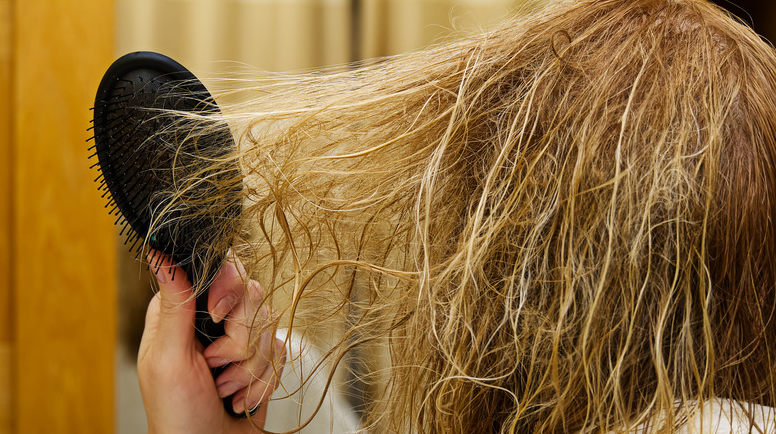
Fact: Excessive brushing can actually cause damage—mechanical stress, breakage, cuticle erosion, especially if you brush when hair is wet. Luxy® Hair+1
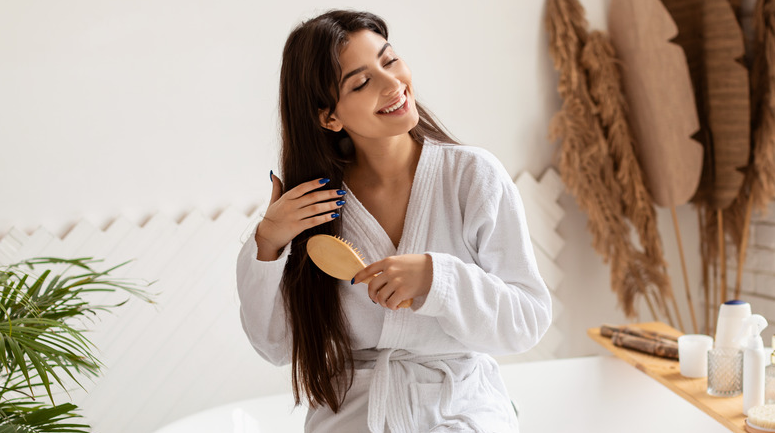
At Beauty Hair Kingdom we emphasise that brushing should be gentle, purposeful (to detangle or style) rather than excessive. Use the right tool (such as a wide-tooth comb or soft-bristle brush), especially on wet hair, and avoid tugging; this prevents unnecessary breakage and promotes healthy appearance.
Practical tip: Start detangling from the ends upward, hold the section to minimise pulling, and brush only as needed — there’s no magic number.
3. Myth: Switching shampoos regularly prevents your hair from “getting used” to a product
Some women believe that hair or scalp become used to a shampoo, so switching every few months is needed to maintain effectiveness.
Fact: The idea that the hair “gets used to” a product is largely unfounded; more likely, the hair’s condition has changed (due to seasonal variation, treatments, environment) and what you need has changed. Duolife
At Beauty Hair Kingdom, we advise that you select a product matched to your hair’s current needs (for example colour-treated, heat-styled, dry ends) and maintain it until your hair or scalp condition changes — then evaluate if a change is needed.
Practical tip: Rather than switching out of a mistaken belief, assess changes in your hair (texture, shine, breakage) and adjust accordingly.
4. Myth: A cold water rinse seals the cuticle, making hair smoother and shinier
While many salons and blogs promote the “cold rinse” trick, the science is more nuanced.
Fact: Cold water alone does not significantly alter the hair cuticle in a way that improves shine; conditioning and real cuticle-smoothing treatments play a larger role. Keyoma+1
At Beauty Hair Kingdom we teach that what matters is the hair care routine as a whole: the ingredients, conditioning treatments, protective styling, scalp health. A cool rinse might feel refreshing, but it is not the main solution.
Practical tip: After shampoo + conditioner, you may finish with a lukewarm or slightly cool rinse if you like the feel, but focus your budget/time on quality conditioner, leave-in treatments, and styling protection.
5. Myth: Fine hair doesn’t need conditioner
A fairly common belief is that fine hair is naturally sleek and thus can skip conditioner without risk of damage or weighing down.
Fact: Conditioner provides more than just moisture – it can help detangle, improve shine and manageability even on fine hair. The key is using a lightweight formula and applying mostly to mid-lengths and ends rather than scalp. iHot Cosmetics+1
At Beauty Hair Kingdom we recommend fine-hair users choose a volumizing or lightweight conditioner, apply it mostly below the ears, and rinse thoroughly to avoid product buildup at the roots.
Practical tip: If you feel your hair gets limp or flat after conditioner, choose a lighter formula or reduce the amount and avoid the scalp region.
6. Why understanding myths & facts matters
With so many myths circulating via social media, influencers, and marketing headlines, women can easily adopt routines based on false assumptions. At Beauty Hair Kingdom we believe that by clarifying these myths, you can shift to practices that deliver real benefit — less breakage, healthier scalp, stronger, shinier hair — without unnecessary rituals.
SEO keywords you might find helpful: “hair washing frequency women”, “how often to wash hair women”, “brushing hair myth 100 times”, “conditioner for fine hair myth”, “cold rinse hair myth”, “haircare myths facts women”.
By integrating the right terms and giving genuinely helpful content, Beauty Hair Kingdom aims to become your trusted resource for hair-care education.
Conclusion
In summary: washing and brushing myths abound, but the reality is that healthy hair care is about smart, consistent habits not extreme rituals. At Beauty Hair Kingdom we encourage you to review your routine — assess your hair type, scalp condition, lifestyle — and apply scientifically-grounded practices. Skip the “100 brush strokes”, don’t worry about switching shampoos monthly, use conditioner even if your hair is fine, and focus on overall scalp + hair health rather than chasing shortcuts. By doing so, you’ll set the foundation for hair that not only looks better but is genuinely healthier.
Stay tuned at Beauty Hair Kingdom for more myth-busting, fact-based guidance to elevate your hair care routine.